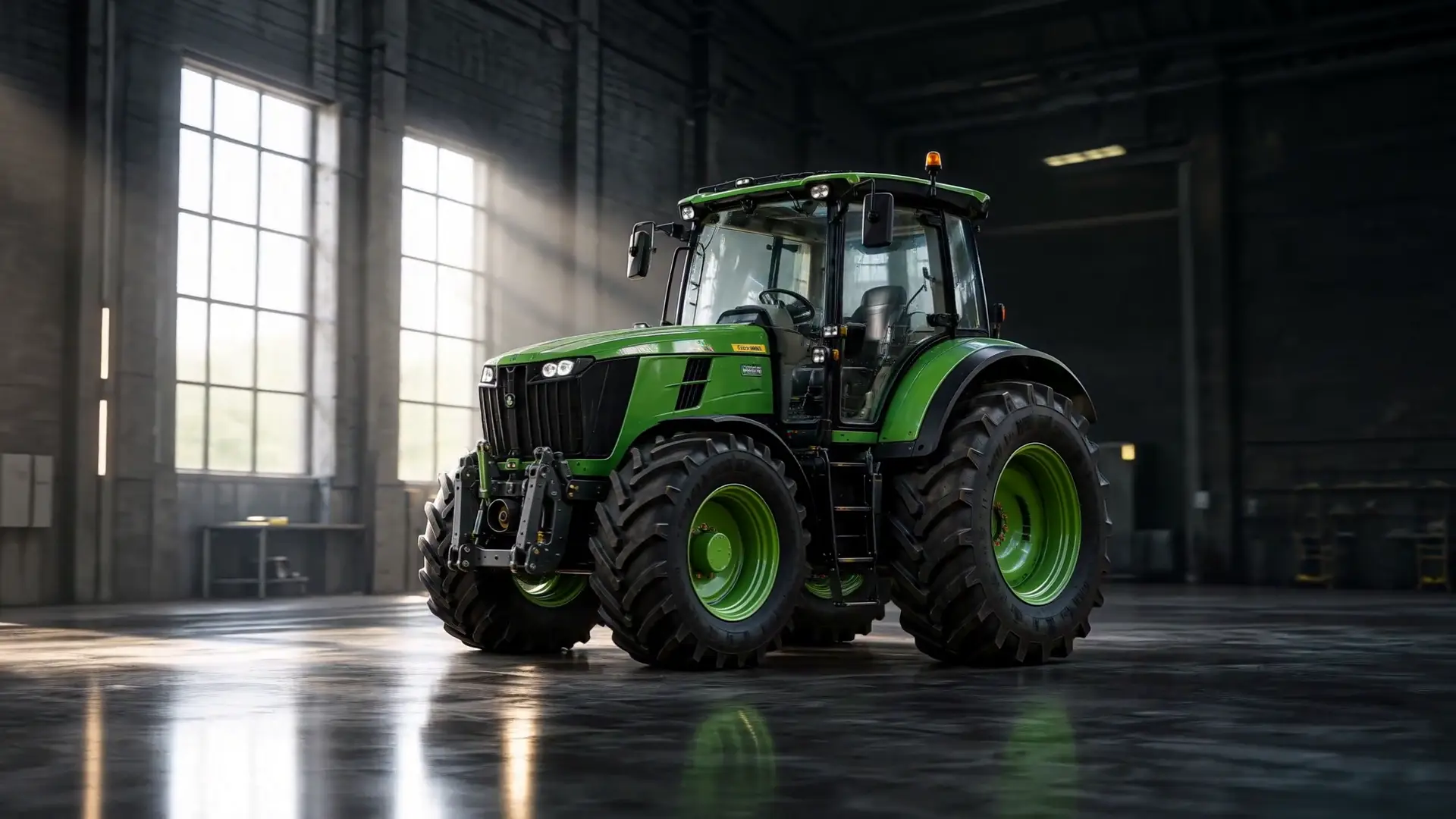
Manure spreader
A manure spreader, or muck spreader, is a trailer that carries farmyard manure to the field and spreads it evenly over the land. It returns nutrients and organic matter to the soil in a controlled way rather than in heaps.
How it works
On a typical rear-discharge spreader, a slatted chain runs along the floor of the box and slowly drags the whole load towards the back. There it meets the beaters, rotors studded with paddles or tines, which shred the manure and throw it out behind and to the sides. The beaters are driven from the tractor's PTO, while the floor chain speed is set separately, mechanically or hydraulically, and that speed largely decides the application rate.
A hydraulic guillotine door at the back on many models holds the load back while the beaters spin up, giving an even start and a cleaner stop on the headland.
Main types
- Horizontal beater spreader: Simple, cheap and needs little power. It unloads quickly but spreads only a little wider than the machine, so passes must be close together.
- Vertical beater spreader: Two or more upright beaters throw the manure wider, typically six to nine metres, which suits lower rates and drier material.
- Beaters with spreading discs: Beaters shred the manure onto spinning discs beneath them for widths up to around 15 to 18 metres and fine rate control with loose, crumbly manure.
- Side-discharge spreader: A V-shaped tank with an auger or flail rotor throws material out of one side. It copes with everything from bedded pen manure to very wet slurry.
- Slurry tanker: For liquid manure. Splash plates spread it on the surface, while trailing hoses, shoes or injectors place it on or into the soil to reduce smell and ammonia loss.
Hooking it up to a tractor
Most spreaders are trailed from the pick-up hitch or drawbar, with the beaters driven by the 540 or 1,000 rpm PTO and hydraulic services for the door and floor chain. Small ground-driven or compact units suit garden and smallholding tractors. Required power rises with capacity and spreading width; with large twin-axle spreaders and slurry tankers, tractor weight and braking for the full load matter as much as horsepower.
A short history
Joseph Kemp built the first successful mechanical manure spreader in 1875 near Magog, Quebec, and later sold his design to International Harvester in 1906. In Ohio, schoolmaster Joseph Oppenheim began building a wide-spreading machine in 1899; neighbours called it his new idea, and the New Idea company went on to sell over 10,000 spreaders in 1926. Early machines were horse-drawn and ground-driven; tractor PTO drive and hydraulic rate control followed.
Buying and care tips
- Match the spreader to the manure: Dry, strawy manure suits rear-discharge machines; wet or mixed material suits side-discharge or slurry equipment.
- Calibrate it: Lay a tarp of known area, drive over it, weigh what lands on it and work out the rate. Check the side of the bout too so you set the right spacing.
- Record your settings: Note gear, engine speed and floor chain setting so every driver spreads the same rate.
- Inspect chains and beaters: Stretched floor chains, worn slats and broken tines are common wear points on used machines.
- Wash it down: Manure is corrosive. Clean the box after the season and grease all bearings before storing.
Questions people ask
What is the difference between horizontal and vertical beaters?
Horizontal beaters drop manure in a narrow strip behind the spreader. Vertical beaters throw it much wider, so fewer passes are needed and the spread is more even.
How do I calibrate a manure spreader?
Place a sheet or tarp of known size in the path, spread over it, weigh what landed and scale up to tonnes per hectare. Adjust floor chain speed or forward speed until you hit the target.
Who invented the manure spreader?
Joseph Kemp of Quebec is credited with the first successful automatic spreader, built in 1875.
Can a muck spreader spread slurry?
A rear-discharge box spreader cannot handle liquid. Side-discharge spreaders can cope with quite wet material, but true slurry needs a tanker.
Related equipment
Sources
- Manure spreader, Wikipedia
- The Kemp manure spreader, Farm Collector
- A beginner's guide to manure spreaders, University of Nebraska-Lincoln Water
- Mechanics corner: spread the word and the manure, Progressive Dairy
Last checked 2026-11-01